Shagâna

Shagâna, sometimes called the Fair Land, and known as Near Harad to the peoples of the north, is the northernmost part of Harad, and home to the Shagâni people. It lies directly east of Umbar, south of the lands of Mordor, and west of the hostile land of Khand. Shagâna forms a transitional zone between the temperate lowlands of northern Harad and the more arid, dangerous regions farther south, featuring a mixture of river valleys, rolling plains, and rugged highlands that have influenced settlement patterns, trade routes, and military campaigns throughout its history.
The region is primarily known for its bountiful ridge and fertile river valley, which have long sustained the Ikorbâni and other Haradrim peoples. The Valley of Ikorbân is a territory that contains the four major regions Ambarûl, Khûd Zagin, Imhûlar, and Urash Dâr. These lands form the economic, cultural, and political heart of Shagâna, with settlements ranging from fortified towns to scattered rural homesteads. Agriculture, herding, and trade along the river Ikorbân are central to the region’s prosperity, while the surrounding hills and plateaus provide natural defenses and strategic vantage points that have shaped both historical conflicts and local governance.
To the south of the river valley lies another territory, that of Mûr Ghala, the Ridge of Plenty. The ridge contains the four major regions Adagím, Kighân, An Shêru, and Idagâl. This land was previously a heartland of the Shagâni people, but its bounteous green lands were ruined in the Great Dearth, draining the lakes of Idagâl and leaving An Shêru a dessicated wasteland, and Adagím plagued with a creeping blight. Past the ridge of Mûr Ghala lies the northern part of Jarmát, with the shifting sands of Gul Sakhasha and the Dune Sea beyond.
Shagâna has historically served as a cultural and political crossroads. Its location between northern and southern Harad made it a frequent route for caravans, armies, and migrating peoples, resulting in a long history of both cooperation and conflict among its inhabitants. The region's strategic importance attracted the attention of neighboring powers, from the city-states of Umbar and the powerful armies of Jarmát, to the warlike tribes of Khand and even adventurers and mercenaries from Southern Gondor in the north. This constant interplay of influence has left Shagâna with a rich tapestry of customs, languages, and architectural styles that reflect the diverse peoples who have inhabited and contested its lands over the centuries.
Connected Locations
- Cape of Umbar
- Abaníssa in Jarmát (Far Harad) - not yet in-game
- Gûl Sakhâsha in Jarmát (Far Harad) - not yet in-game
- Harondor (Southern Gondor) - not yet in-game
- Khand - not yet in-game
- Lâkhedin - not yet in-game. May be part of Shagâna.
- Silapesh - not yet in-game. May be part of Shagâna.
Release history
The first part of Shagâna was added to the game on November 6th, 2024 with the introduction of the Valley of Ikorbân and its four regions, marking the beginning of Harad's in-game representation. This addition established the foundation for future expansions, offering players a view of Shagâna's landscapes, settlements, and historical depth, as well as opportunities for storytelling and exploration within the broader context of Haradwaith. The second part of Shagâna, the territory of Mûr Ghala with its four regions of Adagím, Kighân, An Shêru and Idagâl, as well as the lake of Sûg Nidar outside the Mûr territory were added on December 3rd, 2025, with the Kingdoms of Harad expansion.
Maps
-
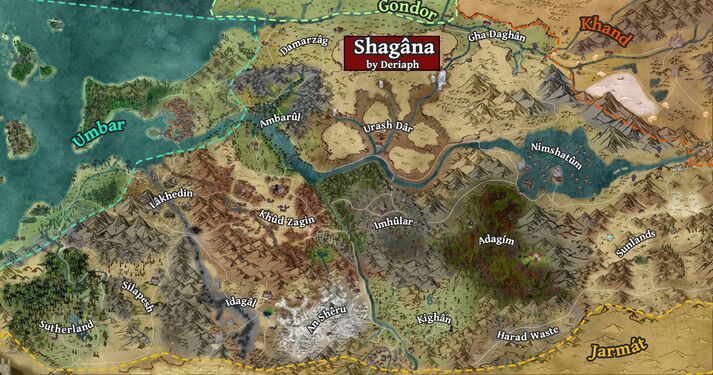 Shagâna, a fan-map by Deriaph
 -
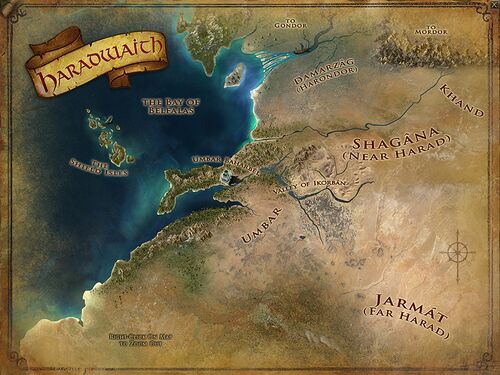 Shagâna as depicted on the map of Haradwaith
 -
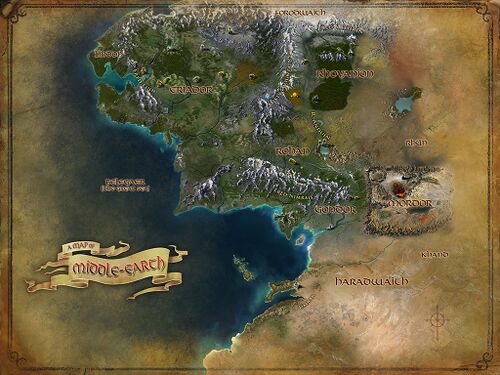 Shagâna within the broader geography of Middle-earth
 -
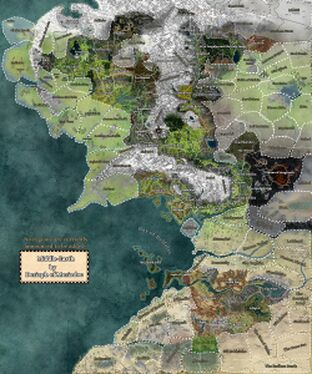 Shagâna is surrounded by regions yet to be announced.


| Regions within Harad
| ||
|---|---|---|
| In-game: Shagâna: Valley of Ikorbân (Ambarûl • Imhûlar • Khûd Zagin • Urash Dâr) • Mûr Ghala (Adagím • An Shêru • Idagâl • Kighân) • Sûg Nidar Not yet in-game: Aradûn • Lâkhedin • Silapesh • Yâd Hakar • Jarmát: Abaníssa • Gûl Sakhâsha • The Hatokáli Fells |